
For the Birds
The distraction we all need.

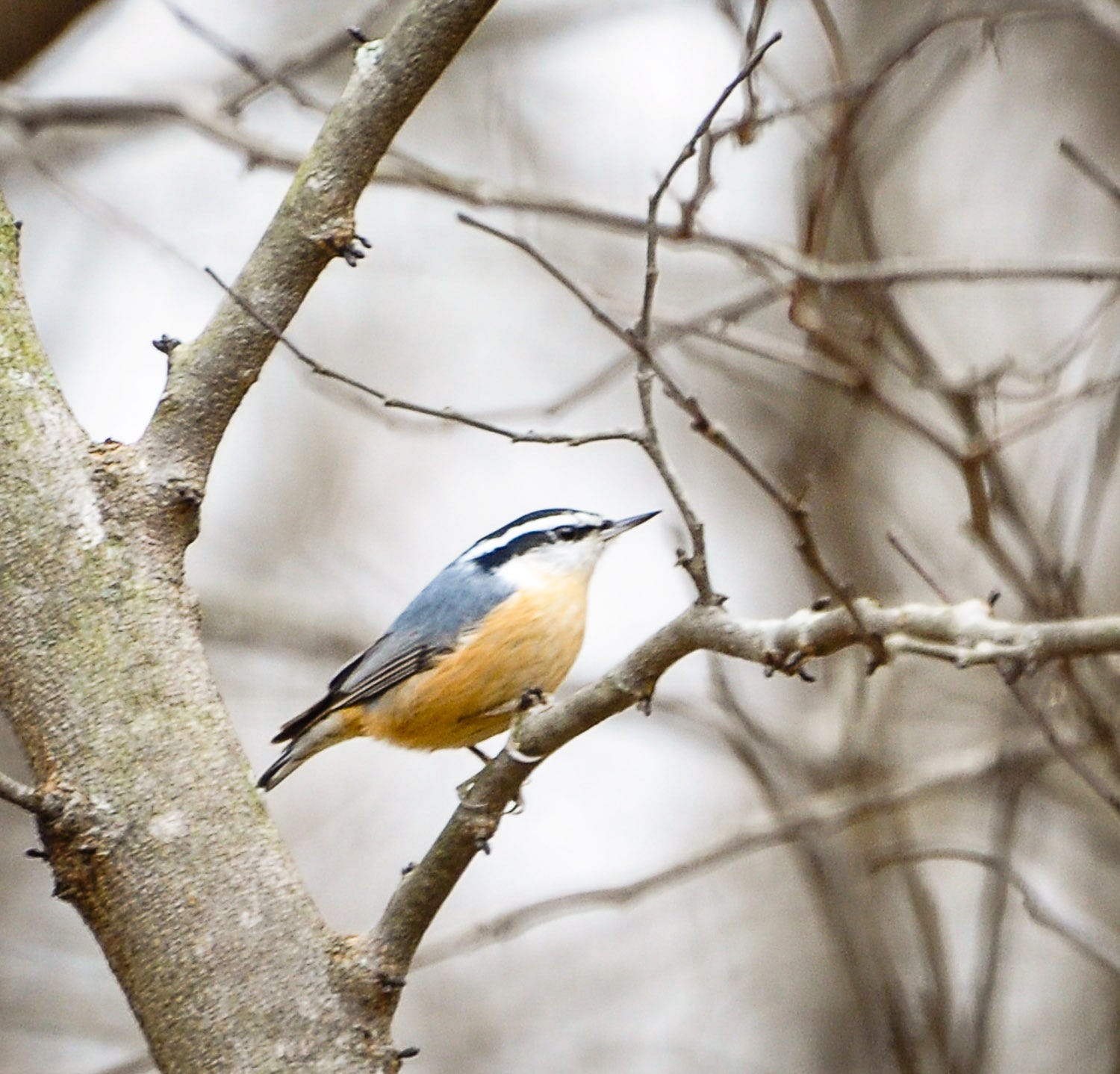
There are an estimated 50 billion wild birds on this planet, six for every human. Birds capture our imagination and fill our souls with wonder. Their ability to fly at a millisecond’s notice and long distances year after year, often returning to the exact location, their striking plumage, and unusual, sometimes odd behaviors enthrall and captivate our sense of wonder and curiosity. Unsurprisingly, we use language to embrace bird and bird behavior, especially idiomatic expressions.
Hi friends, I hope you’re faring well during these difficult times. It’s hard not to get caught up in the world’s messiness, but we must remain vigilant to find balance in the chaos. One solution: birds. With their clever and uncanny maneuvers, whether mating, flying, or simply perching solo on a wire or post, birds capture our imaginations and wistful desire to fly off, seemingly without a care. Noticing them and their behaviors can be the balm we need as the world spins out of control. Bird behavior is relatively predictable and yet complex. The predictable beauty of a flock of birds soaring across the landscape comes from a creature with a “bird brain,” a once-insulting term dating back to the early 1900s but now considered a compliment. Our feathered friends have more neurons packed into their tiny brains than are stuffed into mammalian or primate brains of the same mass. So, in this short letter, I’m using birds, and bird idioms specifically, as a tool for a distraction from the noise of the day. Enjoy!
Maureen
xx
For the Birds
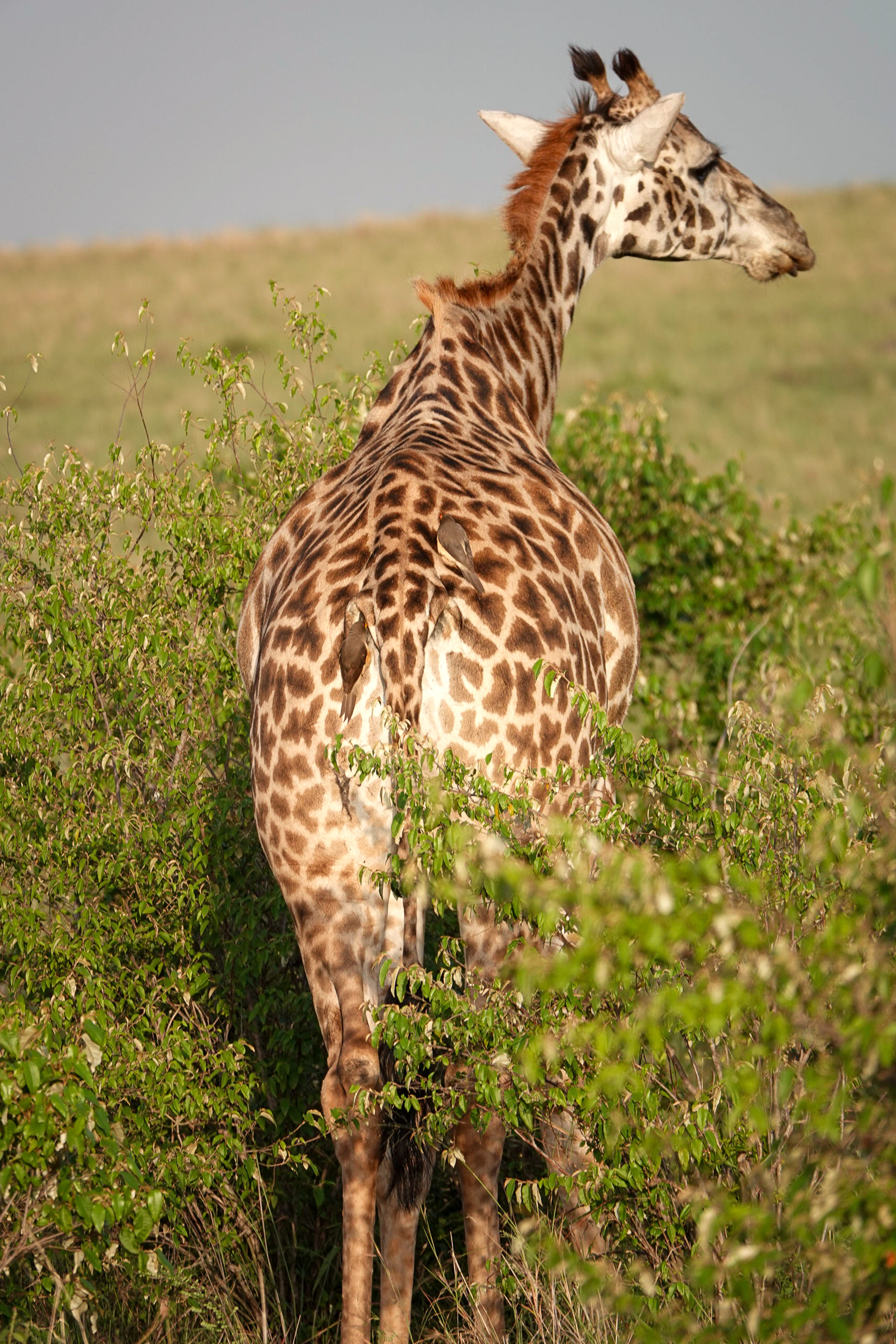
During post-production in Lightroom after my African safari trip, I came across the above image of a Rothschild Giraffe on the Savannah and a pair of Red-billed oxpeckers, one on its back, the other with its head inside the giraffe’s butt pecking for seeds. Ten-year-old me laughed out loud, and then a memory of Mom floated up from my subconscious. Growing up, I pushed ideas her way to gauge the temperature of plausibility or do-ability, and she’d say, “That’s sh*t for the birds.” I don’t recall the exact situation, though I remember my stomach flipped. She used swear words! As a young child, I thought Mom was a Mother Teresa prodigy. She was conservative in actions and language, sweet-natured and determined. But, alas, she was also flawed. Never mind that she didn’t encourage me to explore all the ridiculous ideas in the universe. We lived a practical, somewhat scrappy existence. She encouraged me to be a nurse, earn a trade, or attend college. I wanted to be an artist but left home for a four-year degree to figure out what I wanted to do with my life.
If Mom were alive today, she’d be ninety-eight. She’d sip tea and enjoy birds and her grands and great-grands. I’m Generation Jones, so while I heard the phrase For the Birds often enough growing up and more than likely used it myself back in the day, I rarely use it now. While ten-year-old me, okay, who am I kidding, sixty-two-year-old me, gets a kick from the image of a bird’s head in a giraffe’s bum, I won’t use it for my upcoming art exhibition. It’s pretty useless for commercial purposes, like the phrase itself.
For the Birds is a phrase that originates from the (practical) feeding habit of birds pecking at animal manure for seeds. It means something is useless, meaningless, something not to be taken seriously, or someone is gullible. History on the interwebs about the origin is mixed. It was coined in the Army during WWII or in England during horse and buggy times. When used in a news cycle, the term discusses birds, conservation legislation, or bird endangerment (1.4 percent are extinct, and 2 percent are endangered). Birds matter, and so do words.
Society isn’t using For the Birds much these days. Maybe a few late Boomers use the term. Gen Z would counter with OK, Boomer, and Gen Alpha, well, their language hails from an entirely different planet, also commonly known as TikTok.
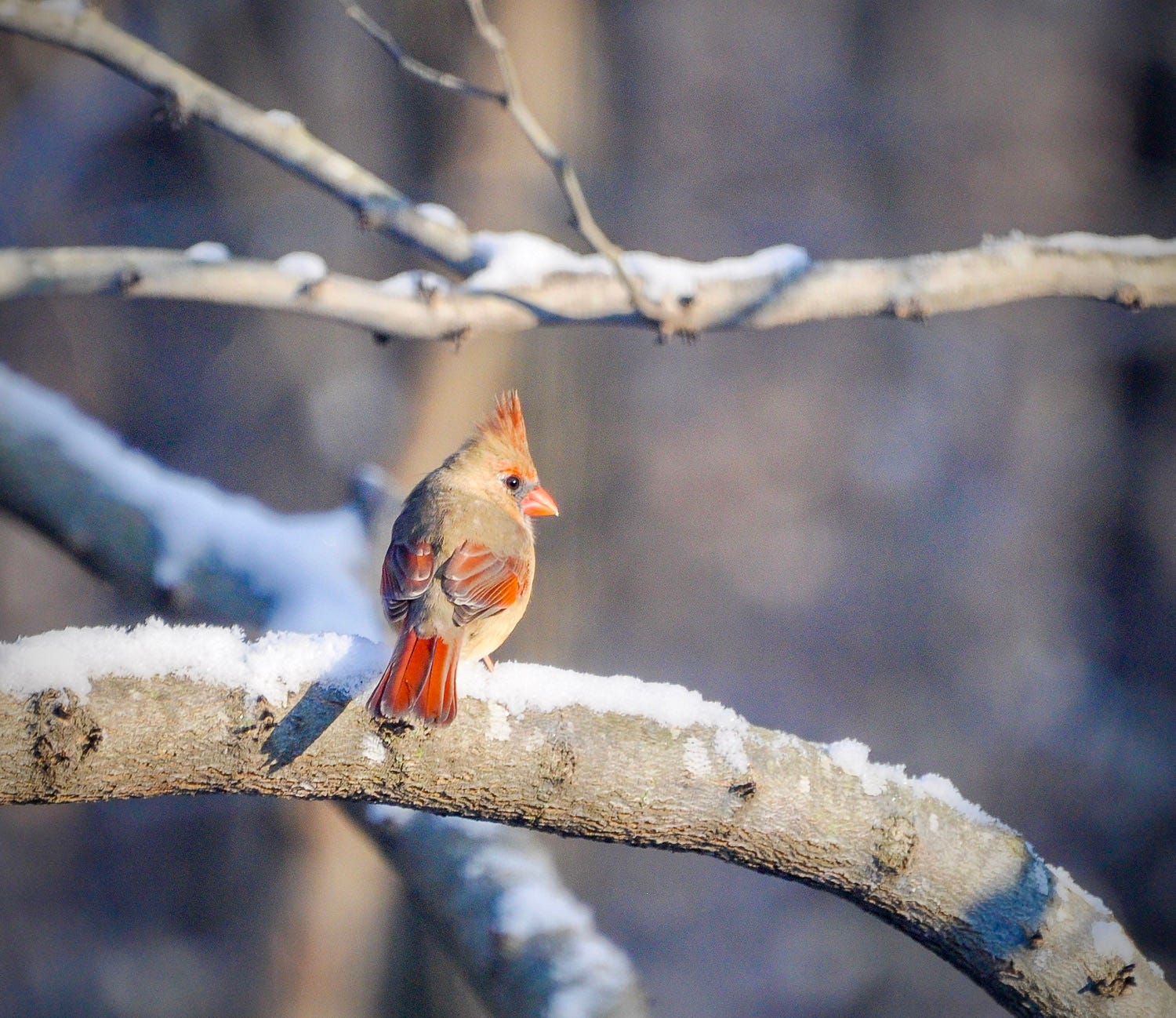
Free as a Bird means easy freedom or unencumbered. It’s easy to imagine the feeling of freedom when you witness a murmuration in the sky, or when a mourning dove bullets through the air to avoid the claws of a red-tailed hawk, or when an eagle soars above a lake, or when a pelican glides on a wind current inches above the ocean surface.
Here is another reference to Free as a Bird. A song written by John Lennon in 1977 as a home demo was recorded in 1995 in a studio by Paul, George, and Ringo.
Free as a Bird is not to be confused with the famous song Freebird by Lynyrd Skynyrd, but it’s worth mentioning. In the early 70s, I attended five, yes, five Lynyrd Skynyrd concerts. Free as a bird was how I felt then. In Freebird, Ronnie Van Sant crooned about wanting his freedom to choose music over love with no regrets. Not the wrong way to live. We carve our paths as we see fit.
A Bird in Hand is Better than Two in the Bush. A saying that relates to appreciating what we already (in hand) have as opposed to what we want (in the bush). Its origin and historical references include falconry, philosophy, and the bible. For today’s purposes, it’s still used but condensed. If someone said, a bird in hand, you probably know the reference.

Eating Crow means to endure something humiliating, or eating humble pie, another Boomer phrase. The origins aren’t specific, but it is primarily an English-American phrase.
Many bird phrases and idioms are used or have been used so often that their meanings are second nature, especially for Americans. We love our slang. Here are a few more.
As the Crow Flies indicates, it is a direct path.
Flew the Coop, another American slang describing someone who escaped prison.
Cock of the Walk refers to a man who thinks he’s better than anyone else, and in the actual bird world, a walk is where the cocks are held before a fight.
A Feather in Your Cap means to recognize a well-deserved accomplishment.
Feathering Your Nest means collecting favors for financial gain, just as birds pad their nests for their young.
Proud as a Peacock means vain. Mom used to caution, “Don’t be a show-off.” I ate humble pie.
Birds of a Feather Flock Together denotes a group of similar or like-minded members.
Eagle Eye means exceptional sight. Predators, especially raptors, have keen sight, even in low light or long distances.
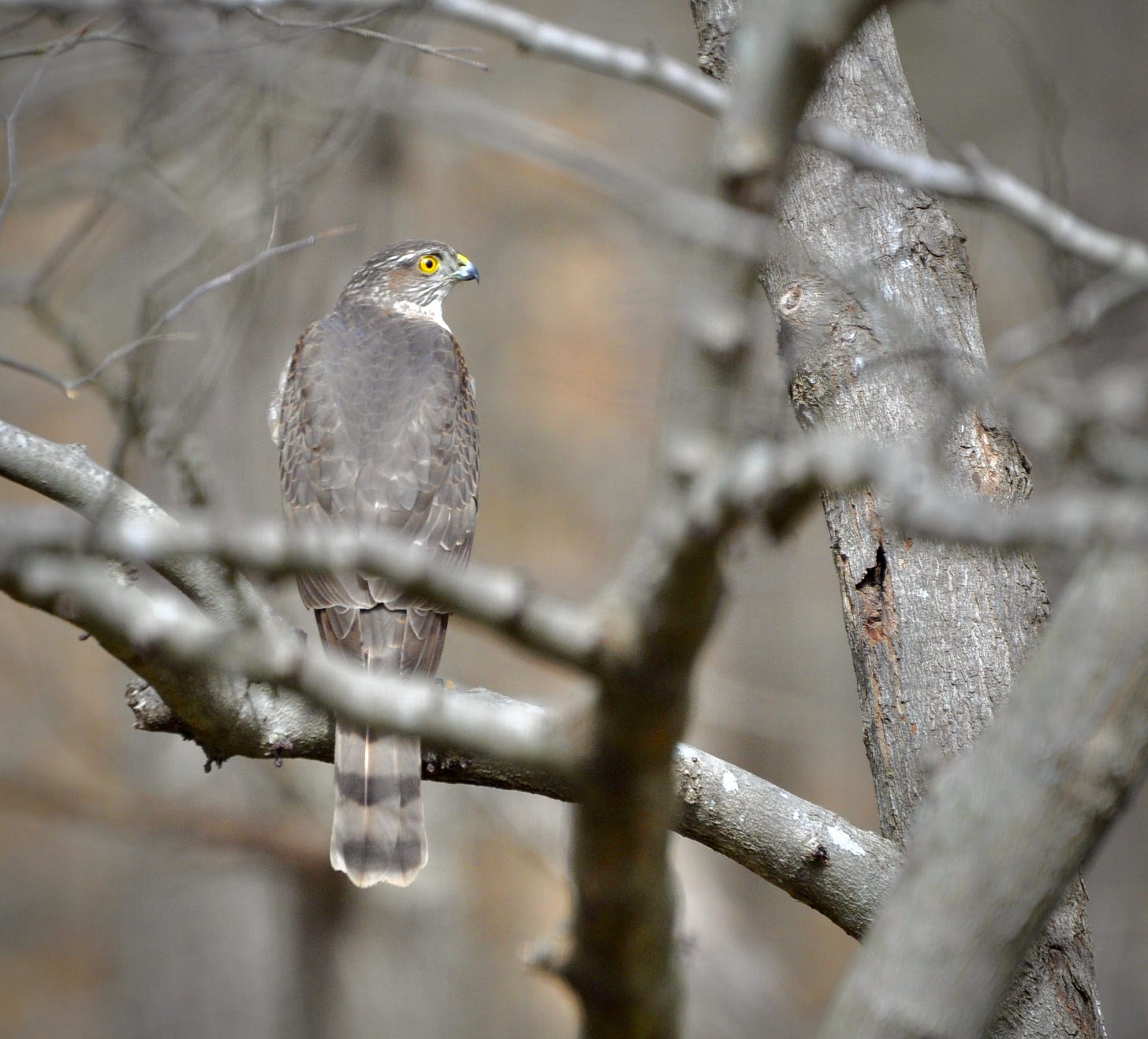
Cooper’s Hawk in search of lunch in western Kentucky—image maureencberry.com. Night Owl references someone more active at night.
The Early Bird Catches the Worm refers to those who don’t procrastinate.
Taking Someone Under your Wing means to protect and care for someone.
Happy as a lark means cheerful. Larks sing merry, melodic songs.
Eat Like a Bird sometimes references (incorrectly) that one eats little because birds are ravenous creatures, eating up to one-half of their body weight daily.

Birds remind us to embrace wonder, be curious, and slow down. Birds connect us and remind us to lighten up when life pushes hard things our way. It’s for the Birds; life shouldn’t be taken too seriously.
I hope this short letter offers you a respite from your day. Which bird idioms are your favorite? Do you still use any of them? Let me know below, or as always, hit reply to respond privately. I love hearing from you, and I respond to all.
Have a remarkable, curious bird weekend friends! xo

Stay curious. Stay safe. Make an impact.
lovin the turkey feather ! Wild Turkey have made a huge comeback in southern Ontario, Canada.. In Point Pellee National Park, the most southern part of Canada eh one may converse.. as they will answer back.. much as raven often do !